Festival Journal · Omnibus
The Conversation Travels
Reflections from the team behind the fall 2025 cross-Canada tour of Buddy Check for Jesse.
When I first met Stu Gershman it was on a windy rooftop above Swann's Pub in Victoria, filming winners of the Victoria Community Leadership Awards during COVID. I had recently lost my older brother Darcy, and Stu had some years before lost his son, Jesse, to suicide. If grief is a doorway we must all one day pass through, we got to talking when we recognized in each other someone on our side of that door.
Grief asks different things of different people; and there are as many ways to grieve as there are people. When Darcy was in the hospital, I would read out loud to him. And after he passed, I kept reading books out loud, as if he was still there with me. It's my way of carrying on a conversation and keeping his memory alive in me.
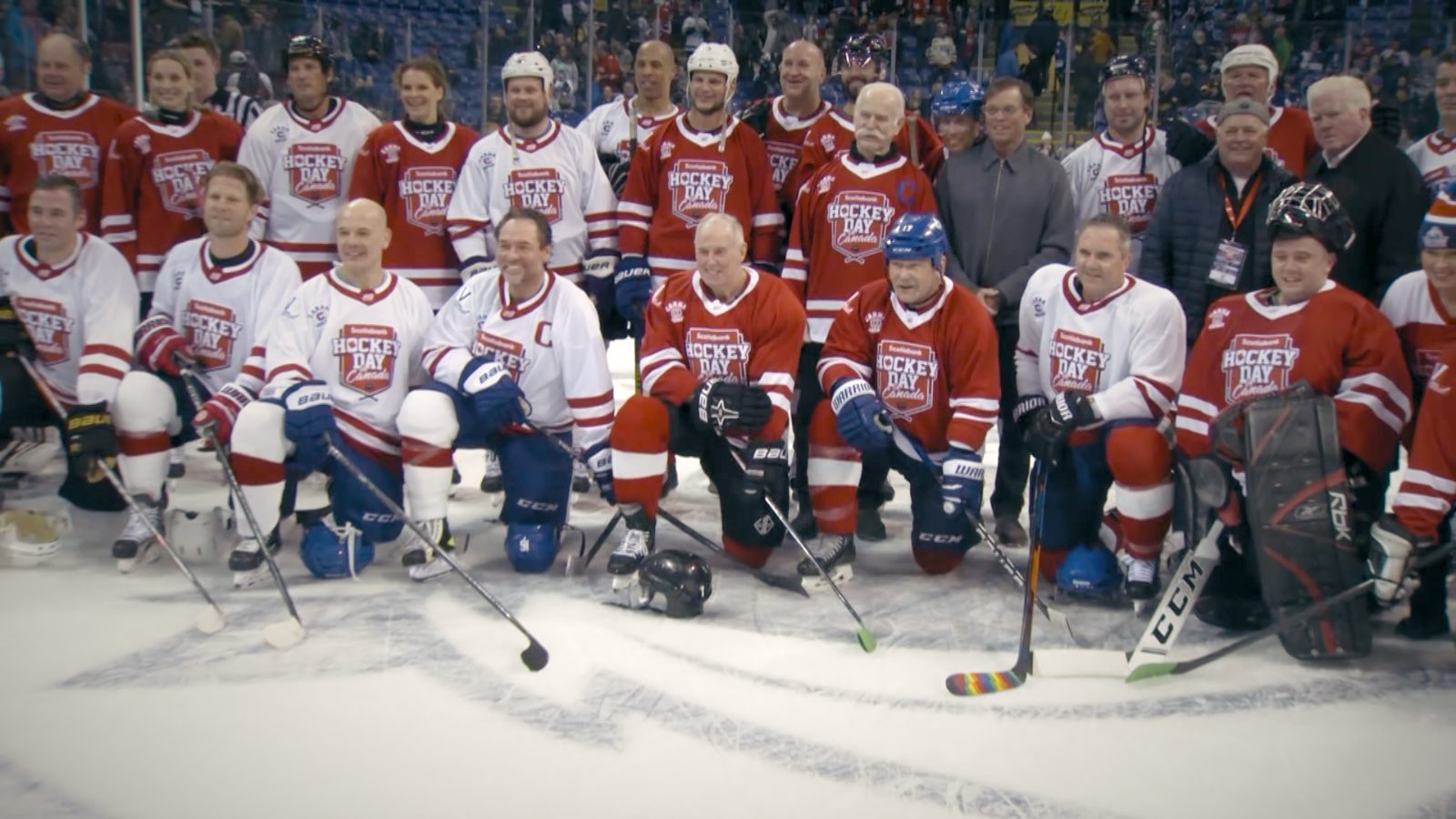
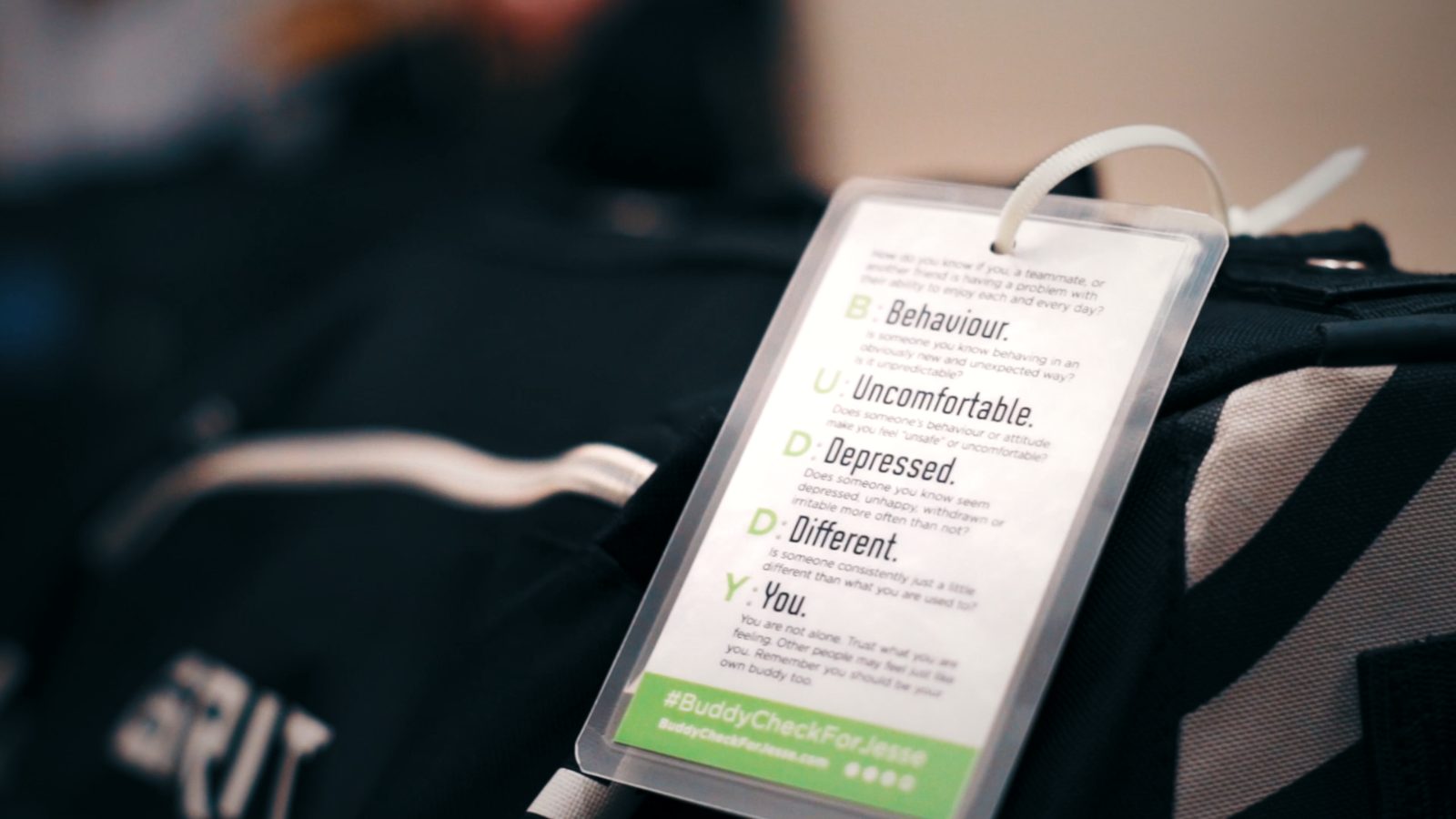
Stu's grief asked something else of him. He turned outward. Seeing the urgent need, he started speaking openly with his sons' hockey teams about mental health. Not some deep dark, scary conversation from a 'professional', but an honest talk, at their level, from someone they looked up to - their coach. He talked about what to watch for in themselves and in each other, and how to check in. He said Jesse's name out loud and told his stories.
That simple act got repeated, then taken up by other coaches, then formalized into a program, and it has now reached more than 18,000 young athletes of all genders across the country in more sports than I can name. And the best part, as Stu describes in our film, is how it keeps Jesse's memory alive. As Stu has put it: "He's still a part of our life because we talk about him everyday."
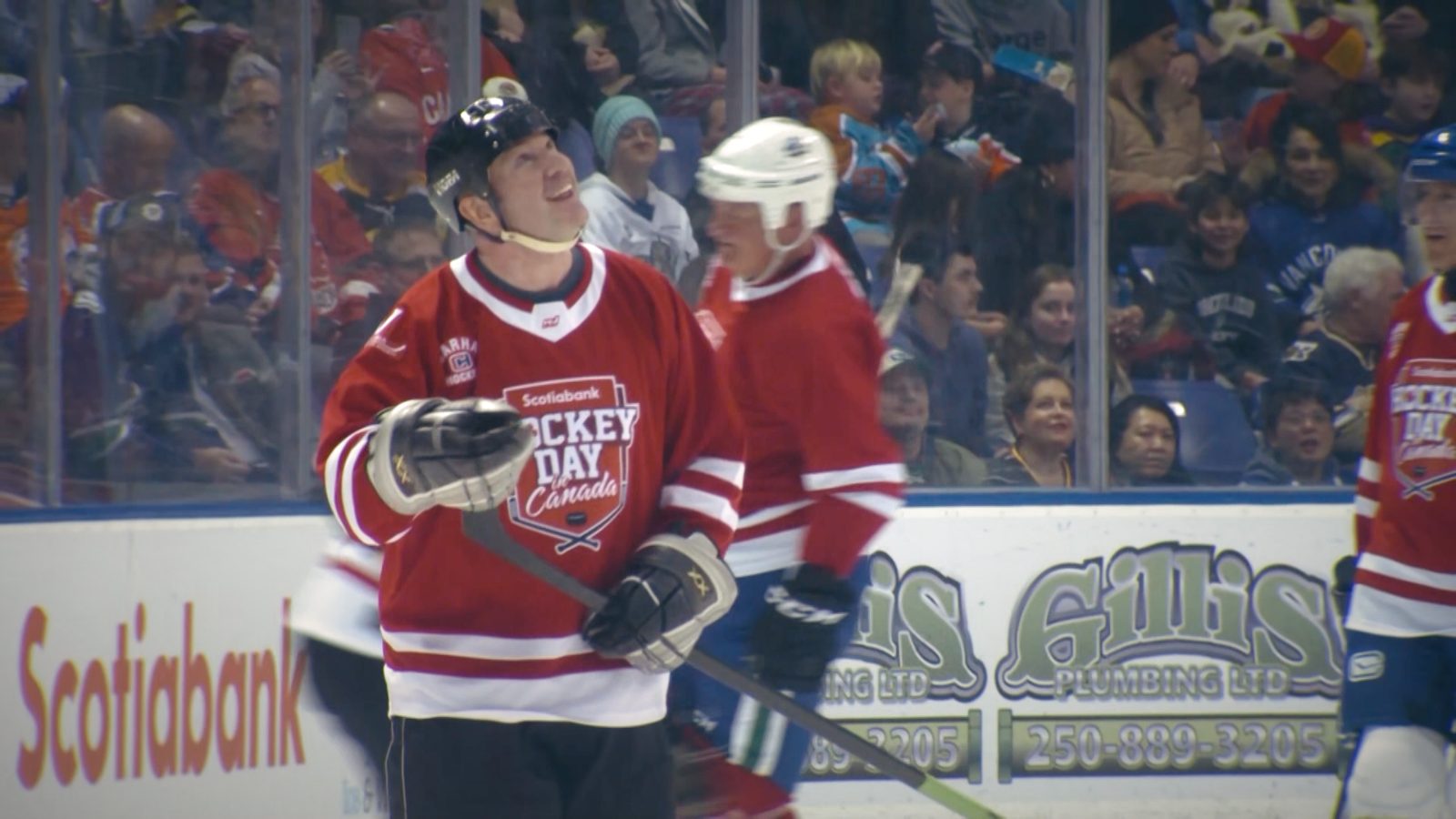
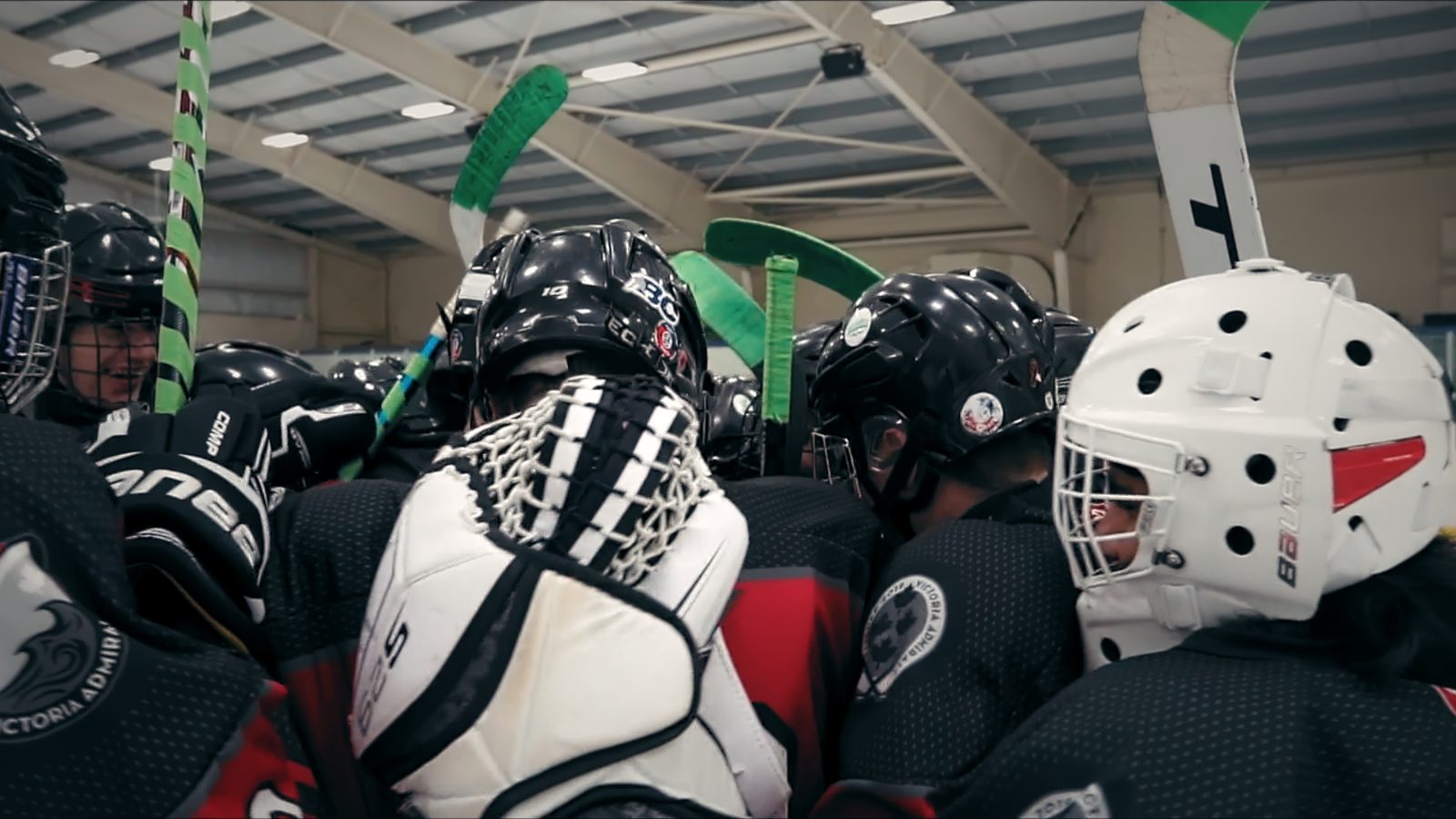
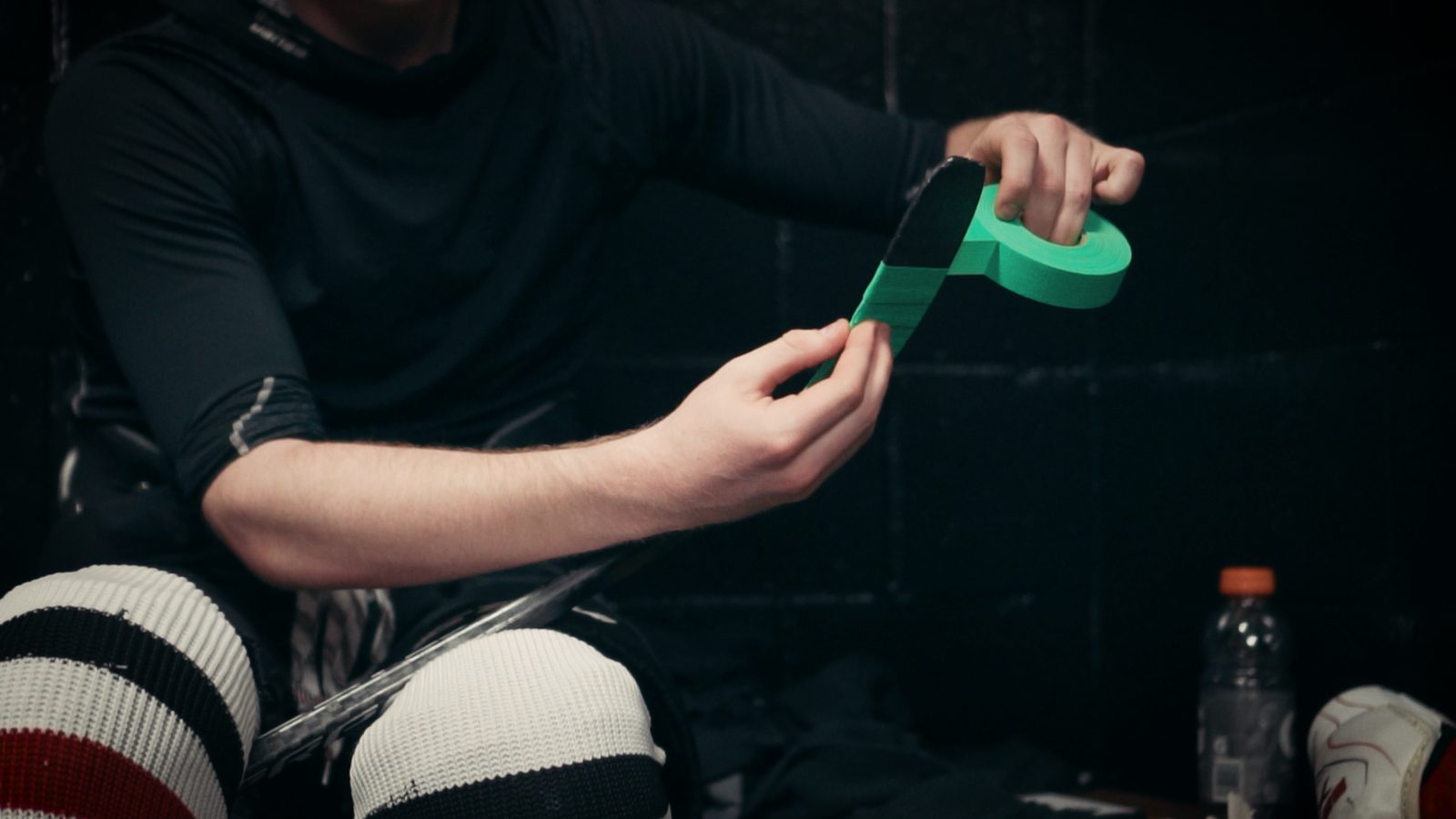
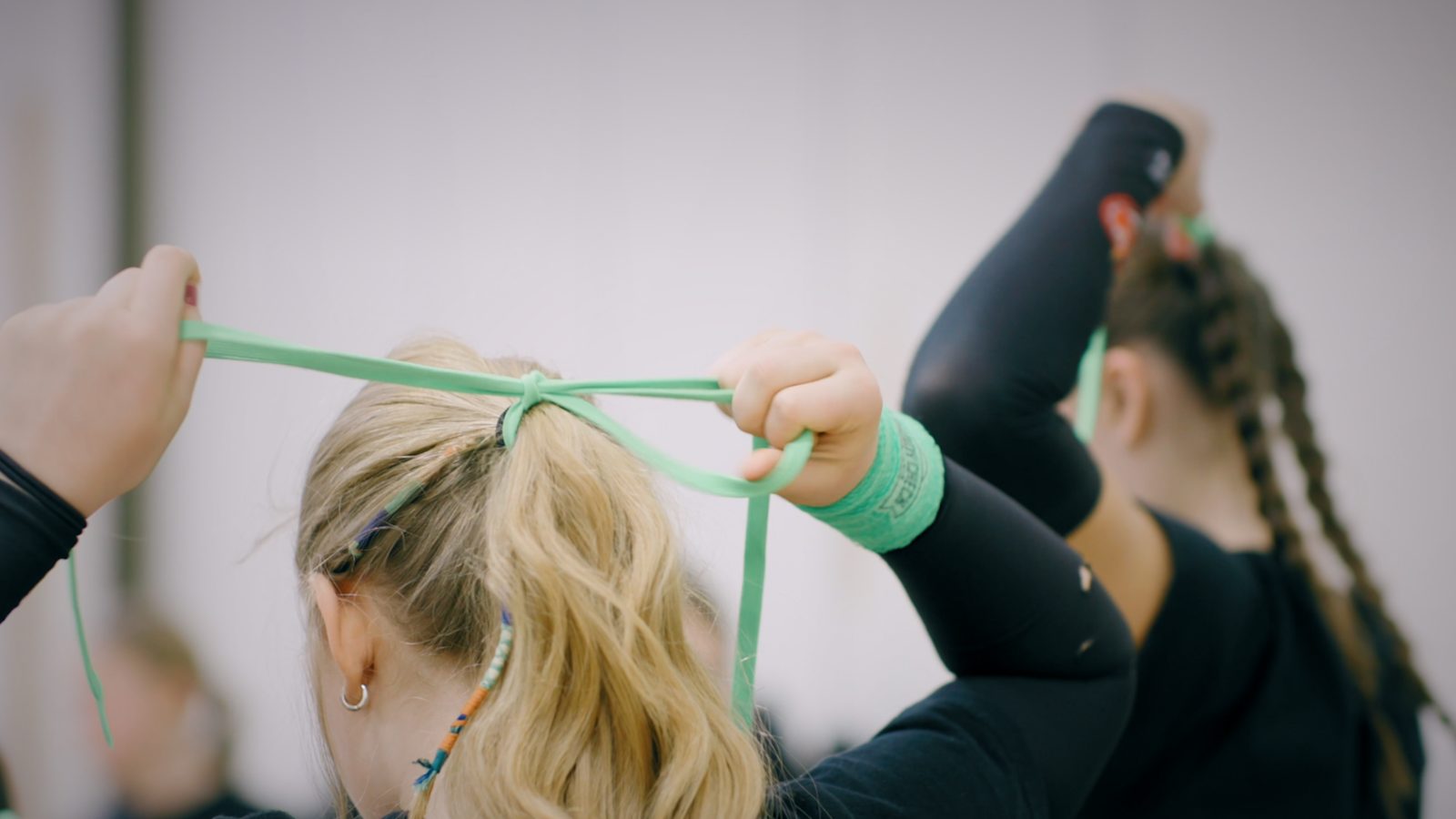
Buddy Check for Jesse is, at its core, a prevention program. It does not ask the young people who encounter it to grieve. It asks them to speak up when they themselves are struggling, and to notice when a teammate is. The program's symbol is green tape, the colour of mental health, which young hockey players wrap around their sticks during Buddy Check events. Or young soccer players use to tape up their shin guards. Or young volleyball players use to tie up their hair. The film documents how that simple ask travelled. From one locker room, to one team, to thousands.
This fall, with support from the Canada Council for the Arts, the team behind Buddy Check for Jesse took the short documentary on the road. Six screenings across four provinces and one territory. The film is essentially an invitation to start a conversation on youth mental health, and this is a report on what the conversation did when we put it on a plane and let it travel.
Recaps from each stop are linked at the bottom. What follows is what we noticed across all of them. I hope these learnings can be as instructive to others as they were for our team.
A note about the seven we proposed and the six we screened
The original grant application named seven festival selections. The film was officially selected by all seven, and we are grateful for the recognition. The Brampton Canada International Film Festival, programmed for the very first weekend of the grant period, ultimately did not bring Buddy Check for Jesse through to a public screening. That was a normal exercise of programmers' discretion at festivals that announce more selections than they end up running. We did not get the chance to screen there or to host a discussion with that audience. The other six selections all proceeded, and our team was present at each one. Across the six funded screenings, approximately 1,080 audience members were directly engaged in person, with the largest single rooms at SIFF Saskatoon's Broadway Theatre and at the Capitol Theatre in Yellowknife. The Chilliwack Independent Film Festival reported more than 2,500 audience members across its full five‑day programming, well beyond the screening slot in which our film played. The numbers, observations, and follow-ups in this report refer to those six funded stops.
For context, the funded six were not the only stops Buddy Check for Jesse made in 2025 and into early 2026. The film has now screened at more than nineteen Canadian festivals, including Victoria, Abbotsford, Red Deer, Winnipeg, Lenses (Vancouver Independent), Stratford Winter, Pickering, Grand River, IF Winter Cinema, and Best Short Fest, with additional screenings continuing well past the December reporting window. The funded leg was the deliberate, geographically distributed core of that broader circulation. We mention the wider circuit here because the relationships and learnings the funded leg produced have shaped how the film travelled at every other stop too, and because the cumulative reach is the right denominator when assessing impact.
What we noticed
The locker room is everywhere, and it isn't always a locker room. Buddy Check for Jesse rests on the premise that values about mental strength, about silence, about how to be a person who looks out for the person beside you, get taught in the everyday spaces where young people figure out who they are becoming. The locker room is one of those spaces, and the program reaches young athletes of all genders across hockey, basketball, soccer, softball, and volleyball. What we noticed, on the road, is that every community has its own version of the locker room rooted in their language and culture. In smaller, more rural communities, the role sport plays in that community can be outsized: e.g., the coach often plays a bigger role in community leadership than the mayor. Organized sport can even be your ticket out to see the wider world.
In recognizing the myriad ways culture and sport intersect, youth leaders have a powerful opportunity and perhaps responsibility to acknowledge mental health and what it means to them specifically. It would be all well and good for a so-called mental health expert to come and visit - to deliver the Buddy Check for Jesse talk or to screen the film. Youth in those communities could buy in or tune out. But it means something completely different when their coach, their youth leader, makes the time and effort to speak about what mental health means to them and encourages youth to look after each other. Because at the end of the day, that community is who is going to be doing the everyday work of supporting one another in that becoming. And that's the real goal of the program and the film, is to start those conversations in those communities, to give leaders and youth the tools to have a conversation in the first place, and to let them shape what it will mean for them given their unique language, culture, and context.
Programming the film into a curated short‑film block did the film a favour. Initially, I had hoped the short would be programmed alongside similarly themed films to create a kind of issue-driven screening event (I had even planned to write discussion guides for this purpose). About half the festivals in this leg took that programming approach, and it made for lively discussion. At New West Film Festival, the film played alongside Kagan Goh's Common Law with participation from Haley Leung at the Purpose Society and moderated by Kevin Takahide Lee; at Yellowknife, we screened before the Jordin Tootoo documentary; and in Sault Ste. Marie, we screened as part of a mental health programme. The other half of this leg's festivals placed Buddy Check for Jesse in shorts blocks alongside other Canadian shorts (Durham's Homegrown Shorts, for example) or general interest documentaries and that was unexpectedly successful too. The audience came in to watch a programme of films, not to take a public‑health lesson. They responded to the work as work. Then they showed up for the conversation afterward with an openness you can't manufacture by labelling something a town hall. As one festival programmer wrote afterward, the screening "exemplified the role that independent cinema can play in fostering dialogue, reducing stigma, and strengthening community connection." There are benefits to both programming approaches, but I appreciate now that this allowed the film to reach an audience who hadn't self-selected an interest in mental health; that audience may even benefit more as a result.
Travel made the in‑person conversation possible. Canada Council support directly enabled a representative of our team to be in rooms in Yellowknife, Sault Ste. Marie, Chilliwack, Saskatoon, and elsewhere. It meant real Buddy Check for Jesse and local mental health resources could be provided to audiences as part of each screening. Flights, ferries, accommodations, gear, the unglamorous logistics that get a film and a person into a community far from where the production team lives. Some of those rooms were small. Yellowknife's screening was at the Capitol Theatre, the city's only cinema, in what turned out to be one of the venue's last festivals before its permanent closure in spring 2026. There is a kind of attention you can only get from an audience that does not, as a matter of routine, get to ask a film's team questions in person. That attention was a gift, and the grant is the reason we were able to receive it.
On accessibility, said once. Across all six screenings, we worked with host festivals on a consistent set of accessibility commitments. Captions were enabled on the film at every stop where the projection chain allowed, which was every stop. Every panel or Q&A used a content advisory and opt‑out protocol at its start, with permission to leave at any time, in plain language throughout. A printable resource sheet, modified for each region's local crisis lines and mental‑health supports, went out at the door at every event. Where I wasn't personally in the room, I cannot personally confirm the implementation of every other measure named in the original application: question cards, roaming microphones, the specifics of physical access in heritage venues. The festivals on this tour are run by people who do this work well, and our trust in them stands. Careful documentation of those measures, however, was not always within our reach.
The follow‑up requests are real, and arriving faster than the application predicted. We projected six to ten new screening or partnership requests as a Phase 1 outcome. We are well past that already. As a direct consequence of the relationships made on this tour and the subsequent CineVic screening at the Victoria Film Festival in February 2026, the film led to a conversation through the festival's SpringBoard industry program that connected me with Story Money Impact, with Sarah Jane Flynn at Knowledge Network, and with Michelle McCree at CBC. Three conversations I would not have been ready to have without the Phase 1 tour creating the work to point to. The Short Circuit Vancouver Island tour will carry the film through Tofino, Courtenay, Nanaimo, and Victoria in spring 2026; I'll personally be part of the Nanaimo and Victoria stops. Additional festival selections continued well beyond the December reporting window, including Stratford Winter, IF Winter Cinema, Pickering, Grand River, Lenses, and Best Short Fest. Buddy Check for Jesse won Best Documentary at Lenses at the Vancouver Independent Film Festival earlier in the year, won the Audience Choice Award at the Canadian Sport Film Festival in 2025, won Best Cinematography at the Saskatchewan International Film Festival in November 2025, and won Best Documentary at the Stratford Winter Film Festival in early 2026. Phase 2 is no longer hypothetical. It is being built, in real time, on the back of the conversations Phase 1 and Canada Council support made possible.
To ask others to be vulnerable, we have had to be vulnerable first. What I learned, screening after screening, is that to open the room, we had to open ourselves. So we led with the personal, Stu with his loss, me with mine, our panellists with theirs, and an extraordinary thing kept happening. Audience members stayed after the lights came up to tell us about the brother, the son, the cousin, the teammate, the friend they had lost or were terrified of losing. People I had never met walked up at concession stands and small festival receptions and trusted us with stories that, by their telling, they had clearly carried alone for a very long time.
If you are ever in any doubt about how prevalent these experiences are, about how many of the people in your own life are quietly living alongside this, I can tell you that we have been moved, repeatedly, by how many of them there are. I am grateful for every story shared with us this fall. I cherish the trust those moments represent, and I do not take any of them lightly. If nothing else had ever come from making this film, if it had never been finished, never been screened, the relationships and the stories that have been entrusted to me through this work would have made every minute worth it.
How the work evolved on the road
A few things took a different shape between the writing of the application and the running of the tour. Each of these was a deliberate choice, made for reasons that became clearer in the doing than they had been at the desk.
Personal presence across the tour. The application described in‑person presence by me at every stop. In practice, I was personally in the room at New West, and our team or Stu's close family friends represented the film at the other five funded stops. Two things shaped that. The first was timing: our newborn arrived as the tour was getting underway, and being home with him and his mother through the early weeks was the right choice for our family. The second was a decision we made early in the planning, when it became clear that distributing the travel across the team would let us hold more screenings on the schedule and bring more local relationships into each stop. The conversations happened. The festivals were generous. A small team carrying a film together, instead of a single director carrying it alone, is a touring model we will keep using.
Multi‑partner panels. New West was the standard we strove for: Haley Leung from the Purpose Society, Kagan Goh, Stu Gershman, me, Kevin Takahide Lee moderating, with the multi‑voice conversation the application described. Across the rest of the tour, the picture was uneven, and not for lack of trying.
Our PR tracker documents the comms work behind every stop. We cast a wide net at each festival, contacting national bodies including CMHA and the Mood Disorders Society of Canada, provincial mental‑health and youth‑sport organizations, and a long list of local partners flagged with each festival's host. Some of that outreach produced partner participation on stage. Much of it did not. Coordinating panellists' calendars, getting an organization's representative to commit to a specific time and place at a specific festival, and ensuring they could speak in their own voice in the room, is complicated work, and we underestimated it in the application. Of the six funded stops, multi‑partner panels at the level the application described materialized only at New West. Outside the funded six, additional festival stops including Abbotsford, Red Deer, and Winnipeg did host multi‑partner panels, in some cases drawing on contacts the funded tour had helped build. Across the wider tour, the pattern was uneven rather than absent.
What we did make sure of, at every stop, was that local mental health resources were present in and around the event, even where an organization's representative could not attend in person. The resource sheet went out at the door at every screening, with regional crisis lines and local supports specific to that community. If someone in the audience had something come up in the process of watching the film or sitting with the conversation afterward, the means to connect with help in their region was in their hand before they left the theatre. That was the floor we set for ourselves, and we held it across the tour.
Looking ahead, this is one of the areas where the partnership we are now building with Story Money Impact, through CreativeBC and the Victoria Film Festival's SpringBoard program, will be most useful. Story Money Impact does this work for a living. They open doors at the institutional and partnership level that we, as a small filmmaking team, were not always able to open ourselves. We carry that lesson into Phase 2 and the feature adaptation.
Feedback collection. The application described post‑event feedback cards or QR survey responses, targeting twenty‑five or more responses per stop. On the road, we made a different choice. The texture of what audiences were sharing with us, often deeply personal, often in lobbies and at concession stands and not in seats, would have been hard to surface through a survey instrument, and would have changed the texture of the conversation if we had tried. Put honestly, it was the wrong tool for sensitive, vulnerable, and much more valuable and intimate mental health disclosures. We listened, took notes, captured anonymous themes through team reports and programmer correspondence, and let the audience's own pace shape what we heard. A more structured feedback approach is something the feature‑adaptation phase is the right place for, where the scale of the campaign and the specificity of the audiences will support it. But here, for the short film, I am honoured to have been trusted with the stories and experiences our audience felt comfortable sharing with the team.
Discussion guide. The application described a written discussion guide circulated to partners ahead of each event. We dropped that deliverable on the road, intentionally. What we found, screening after screening, is that the conversation each room wanted was specific to that room, and the most honest work we could do was to stay present and listen, not arrive with prepared talking points. There was never a moment we needed to fall back on a guide. The deliverables that do matter for the program's next phase, and that we are now developing in coordination with the Buddy Check for Jesse Society, are educator guides and coaches' guides for use inside schools, leagues, and locker rooms. Those are different documents for a different audience. They support the program's implementation, not the film's circulation, and they are where structured prompts actually do the work.
Thank you
To the six festivals (Durham, New West, Chilliwack, Yellowknife, Sault Ste. Marie, and Saskatoon) that programmed Buddy Check for Jesse and built the rooms it spoke into. To the local mental health organizations, sport associations, schools, and community partners named in the recaps and held in the project's PR tracker, who agreed to sit on panels, distribute the resource sheet, and answer the question that always followed our Q&A: who do I call if I need help?
To Stu Gershman, Carson Strom, Robyn Vandersteen, Bruce Pinel, and the Buddy Check for Jesse Society. To everyone on our small team who flew with the film when I could not.
To Peggy Thompson at the National Screen Institute and to Kent Donguines, my program manager at TELUS STORYHIVE. I have to say something specifically about both of you. Midway through the production of this film, my partner and I lost a pregnancy. The thought of returning to the edit, to footage about another father's loss of a child, was for a long time impossible for me. Peggy and Kent extended the project's timeline as long as I needed, without question. When I was finally able to return to the footage, the work of cutting it became, unexpectedly, a very facilitative and healing experience. And the season closes on a note I did not see coming a year ago: our son was born during the tour itself. I told Stu early in the process that even if the film never came together, even if we had to shelve it for personal reasons or logistical ones, the time I had spent with him and his family would have been worth every minute. I still mean that. He is, and I hope will remain, a lifelong friend.
To the Canada Council for the Arts for the support that made the in‑person conversation possible. The conversation does not happen on a screen alone. It happens in a room, with people in it, with a microphone passing slowly along a row of folding chairs. You made the room possible. We will not forget it.
And to Jesse, who is still teaching us, through Stu, through Carson, through Robyn, through everyone who has carried this program forward, to choose connection over silence.
The recaps are below. Read the ones from the communities you know, or the ones from the communities you don't.