Festival Journal · Recap
Recap: YKIFF, Yellowknife
On resonance. Buddy Check for Jesse paired with Tootoo at the Capitol Theatre, November 6, 2025.
The 19th edition of the Yellowknife International Film Festival ran November 5 to 9, 2025, organized by Western Arctic Moving Pictures (WAMP). The festival programmed thirteen feature films and thirty‑eight shorts from eleven countries across three venues: the Capitol Theatre, the Prince of Wales Northern Heritage Centre, and the Top Knight Pub. Festival programmer Jeremy Emerson and WAMP executive director Bran Ramsey curated the event around what WAMP describes as the festival's northern roots, with Indigenous and circumpolar filmmaking sitting alongside Canadian and global cinema.
A pairing worth pausing on
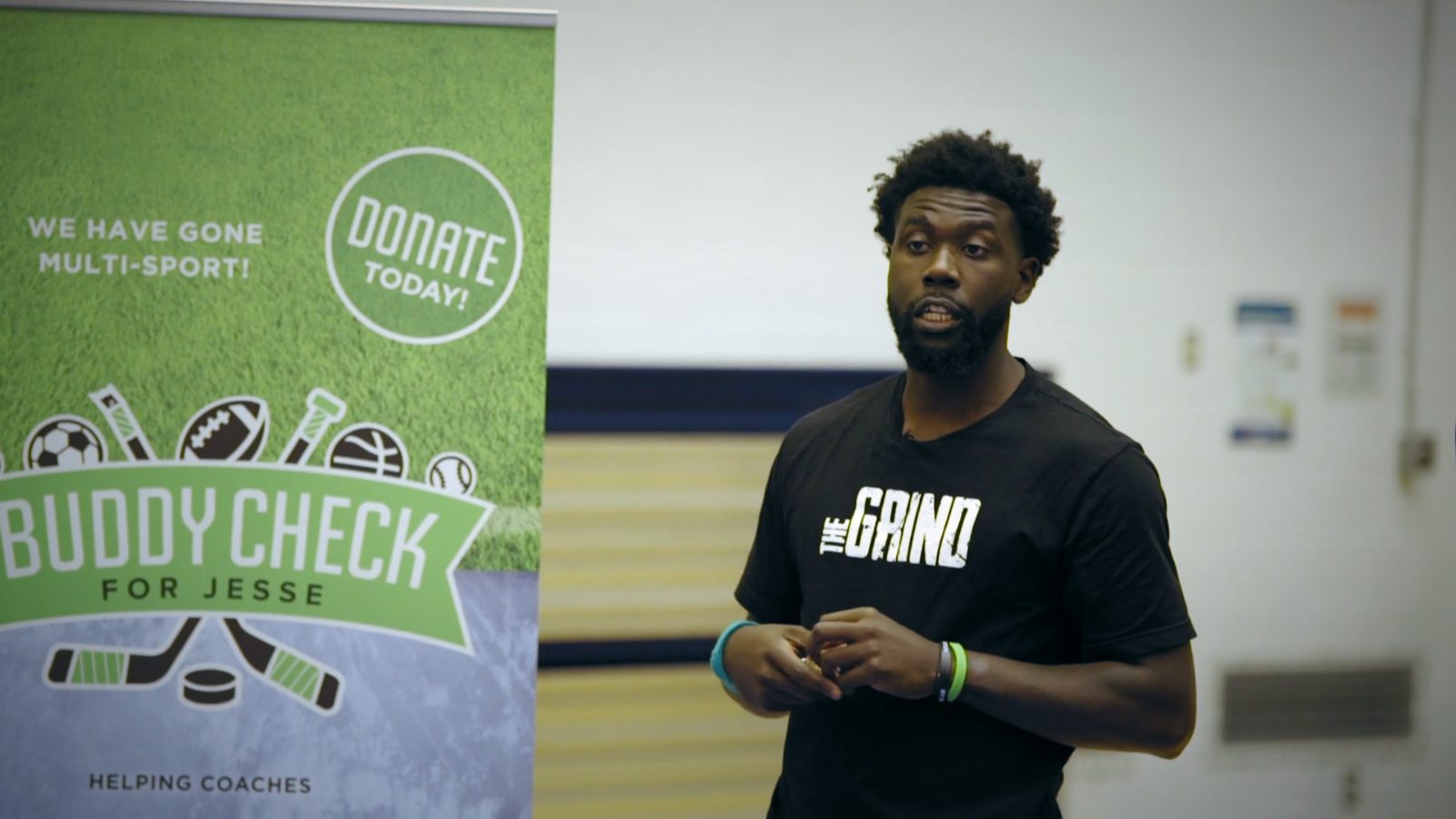
Festival programmer Jeremy Emerson placed Buddy Check for Jesse in the same November 6 evening at the Capitol Theatre as Tootoo, Michael Hamilton's 2024 feature documentary on Jordin Tootoo, the first Inuk player drafted into the NHL. The pairing deserves attention here, because it is the kind of choice that shows what programmers can do.
Tootoo tells the story of Jordin's hockey career, his return to his home community of Rankin Inlet, his battles with addiction, and, at the centre of the film, the loss of his older brother Terence, who died by suicide in 2002, just before Jordin's debut with the Nashville Predators. Stu Gershman's son Jesse died by suicide at the age of 22, in 2014, while working at Google in California. Two stories of profound loss inside hockey communities, told a generation apart, in different cultural contexts, both leading their families and friends into long, public work on mental health and youth wellbeing. Jordin built the Team TOOTOO Fund. Stu built Buddy Check for Jesse.
These are not the same film, and they are not telling the same story. Jordin's film is rooted specifically in Inuit experience and in the suicide crisis Indigenous communities continue to face, a crisis with roots, history, and politics very different from the conversation our film has tried to start. A programmer in Yellowknife saw that the two films were going to make each other's audiences see more clearly than either film alone, and he was right. To screen Buddy Check in front of an audience that had just watched Tootoo, or that was about to, was a privilege we had not anticipated. The film travels differently for having played that night.
The version of the locker room a Northern audience knows
In the Q&A and in conversations afterward, audience members in Yellowknife talked about the version of the locker room a Northern audience actually knows: the rink, yes, but also the school gym, the community hall, and the long bus ride between communities. In the territories, sport is one of the few infrastructures that consistently brings young people together across distance, and it carries proportional weight as a cultural space where mental health language can take root, or fail to.
At the Capitol Theatre
The Capitol Theatre is, was, the only commercial cinema in the city of Yellowknife and one of only four cinemas serving Canada's three territories combined. It opened in 1947 and operated for nearly eighty years before closing permanently on March 31, 2026, a little under five months after our screening. The festival could not have known when it programmed our film into that room that the Capitol's days were numbered. Looking back, that fact gives the screening a weight we did not feel at the time. There is no version of this tour we will remember more carefully than the night the film played in the territory's only cinema, in a house that has since gone dark.
The screening was at 6:30 PM.
What stayed with us
Two things stayed with us from the night.
The first is what good festival programming can do. Jeremy's decision to put Buddy Check for Jesse and Tootoo in the same evening at the Capitol turned both films into something more than they could have been on their own. We have written elsewhere on this tour about programmers placing our film alongside other Canadian shorts so that audiences arrive for cinema first; in Yellowknife, that programming logic was extended to the most thematically resonant pairing of the entire fall. The films were doing related work, and the audience could feel it. That is craft, on the programming side as much as on the filmmaking side.
The second is what it meant to be in the room. There is a particular quality of attention you receive from an audience that does not get to ask filmmakers questions in person as a matter of routine. The Capitol Theatre, on a Thursday evening in November, with a documentary about Jordin Tootoo in the room and another documentary about Stu and Jesse in the same room, was already going to be a heavy night. The audience that came out for it knew what they were coming for, and they brought a presence to the room that we will remember for a long time.
Looking back, the chance to bring our film to the Capitol Theatre was one we could not have had a season later. The Canada Council grant directly supported the trip that put one of us in that room. We will remember it.